How Much It Really Costs to Start a Preschool in India (I Spent ₹12 Lakh — Here's Where It Went)
I opened my first preschool in 2022 in a small town in Pune district with ₹12 lakh. This is the actual breakdown — deposit, furniture, toys, salaries, the buffer — plus the one mistake that cost me double.

Rahul Purohit
· updated · 6 min read
If you search this question, you'll find answers ranging from ₹1 lakh to ₹50 lakh. Most of them are written by franchise brands who want you to buy a franchise, or by loan companies who want you to take a loan. Neither has stood in an empty 1,200 sq ft room wondering whether the flooring budget is going to be enough.
I have. In 2022 I opened my first preschool in a small town in Pune district. I had no education background — I'd dropped out of a BCA degree in the final semester. I put in ₹12 lakh. Today that preschool runs 78 students, and I've since grown to six branches, four of them franchised.
This article is the breakdown I wish someone had given me in 2022. The numbers are mine, from a small town in Maharashtra. If you're in a city, I'll tell you where they change.
The ₹12 lakh, line by line
Item | What I spent | Notes |
|---|---|---|
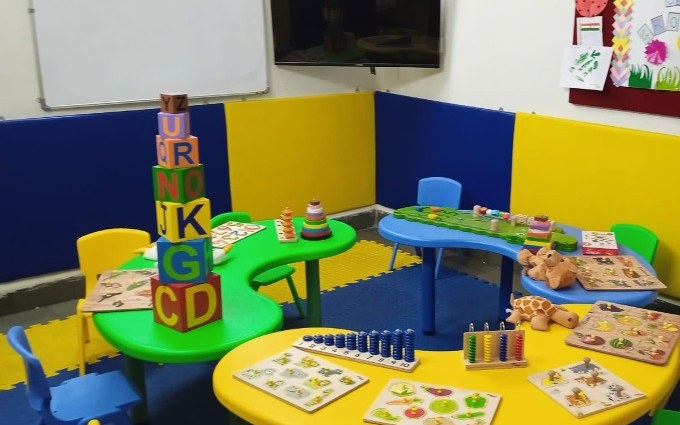
Interior, furniture, flooring | ₹4,00,000 | Child-height furniture, soft flooring, wall work, washroom fittings |
Toys, play equipment, learning aids | ₹2,00,000 | This is where I overspent — more below |
Buffer: 4–6 months of rent + salaries | ₹3,50,000 | The line most people skip |
Marketing (launch) | ₹60,000 | Hoardings, pamphlets, local events, some digital ads |
Space deposit | ₹50,000 | Small-town rate; city deposits run higher |
Curriculum and books | ₹50,000 | First year's material |
Branding, signboard | ₹40,000 | |
Miscellaneous | ₹30,000 | CCTV, first-aid, water purifier, small things that add up |
Licenses and registrations | ₹20,000 | |
Total | ₹12,00,000 |
Three things stand out when I look at this table now.
Interiors and toys together were half the budget. That's normal for a preschool, and it's the part you cannot cut without cutting on children's safety. More on that at the end.
The buffer was the third-biggest line. ₹3.5 lakh sitting in the bank doing nothing felt wasteful in month one. By month five it was the reason I could still pay salaries. I'll say this plainly: if your plan doesn't have four to six months of running cost set aside, you don't have a plan, you have a hope.
Marketing was 5% of the budget. In hindsight, too low — not because ₹60,000 was wrong for the launch, but because I didn't keep spending after it. That's a separate mistake I'll write about another time. Where that ₹60,000 actually goes — and how an inquiry travels from a phone call to a confirmed admission — is a road I've mapped out separately.
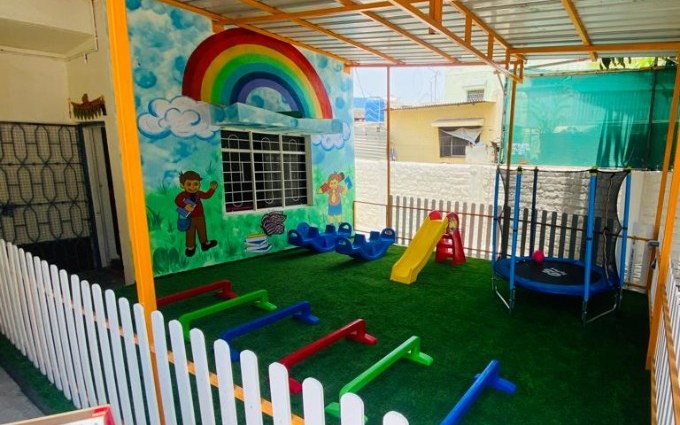
The space
I rented, not bought. 1,200 to 1,500 sq ft is the practical range for a preschool that will run 30–50 students — enough for two or three activity rooms, a small office, washrooms, and some open play area.
What you'll pay depends entirely on where you are:
Small town / rural | City | |
|---|---|---|
Rent per month | ₹6,000 – ₹15,000 | ₹25,000 – ₹30,000 |
Deposit | ₹30,000 – ₹50,000 | ₹50,000 – ₹75,000 |
Mine was at the small-town end. If you're in a city, add roughly ₹2 lakh to the buffer line above just for the rent difference over six months.
I'll cover the rent-versus-buy question in its own article, because people ask it a lot and the honest answer is "almost always rent, at least for the first one."
Staff: hired once, before the session starts
A preschool doesn't hire the way a shop does. There's no "start with two people and add as customers walk in." Admissions happen in a season — roughly March to end of July — and the academic year starts after that. By the time the first day of school arrives, you know how many children you have, and your team has to be in place for all of them. You hire once, before the session. Mid-year hiring is rare, usually only when someone leaves.
So the question isn't "how many staff on day one" — it's "how many staff for the number of admissions I close by July."
My rule of thumb: for every 10–15 children, you need 1 main teacher, 1 assistant teacher, and 1 caretaker (the "maushi") who handles washroom, meals, and the hundred small things.
What I paid per person in 2022, in a small town:
Role | Small town (2022) | City (typical) |
|---|---|---|
Main teacher | ₹8,000 | ₹15,000 |
Assistant teacher | ₹5,000 | ₹10,000 |
Caretaker | ₹3,000 | ₹7,000 |
My first year, I closed 38 admissions by July. That meant a team of 3 teachers, 2 assistants and 2 caretakers — about ₹35,000 a month in salaries, from the first day of the session. In a city, the same team is closer to ₹80,000.
Add rent, and my monthly running cost was around ₹55,000 before electricity and consumables. That's the number the ₹3.5 lakh buffer had to cover in the months before fee collections caught up. With annual fees in the ₹22,500–35,000 range, you can do the math on how many students that takes — I'll write that break-even story separately, because it took me three years and I want to explain why.
The mistake that cost me double
The first time I bought toys, teaching aids, and learning material, I paid roughly twice what I should have.
Not because anyone cheated me. Because I didn't know the market. I bought from whoever was accessible, in small quantities, at retail-ish prices, without knowing which items would actually get used daily and which would sit in a cupboard. Some of that ₹2 lakh is still sitting in a cupboard.
By the time I opened the next branches, I knew exactly which items mattered, which suppliers to go to, and what a fair bulk price looked like. The same setup cost about 50% less. Today, when a franchisee joins, I supply the learning-aid kit myself — because I've already paid the tuition fee on that lesson, and there's no reason they should pay it again.
If you're starting your first one and don't have that knowledge: find someone who runs a preschool and ask them what they'd buy again. That one conversation is worth ₹1 lakh.
Would it cost the same in 2026?
Yes. I've looked at this for every branch since, and for a similar small-town setup at similar quality, the number lands in the same ₹12 lakh zone. Materials have gone up a little; I've gotten smarter about buying. It roughly cancels out.
City setups run higher — mostly rent, deposit, and salaries, as the tables above show. A ₹15 lakh plan is realistic for a city.
"I have ₹5 lakh. Can I start?"
I get this question often, so here's my honest answer.
Can a preschool be started for ₹2–4 lakh? Technically, yes. I've seen it done. A room, some plastic chairs, a few toys, a board outside.
I wouldn't do it, and I tell people not to.
Here's why. Every rupee you cut from a preschool budget comes out of one of three places: safety, hygiene, or the quality of what children touch and learn from. Child-height furniture with rounded edges. BPA-free paint on toys. Soft flooring. Clean washrooms sized for three-year-olds. Learning aids that actually teach instead of just filling a shelf. None of that is optional, and all of it costs money.
You are asking parents to hand you their three-year-old for four hours a day. That trust is the entire business. I'm not willing to run a risk on children to save ₹5 lakh, and I don't think you should be either.
My advice: get to ₹12–15 lakh, and then start. Wait a year if you have to. A preschool started right runs for a decade. One started cheap usually doesn't survive the first parent who walks in, looks around, and walks out.
Next in this series: how many students a preschool actually needs to break even — and why recovering my ₹12 lakh took three years.
