One Premises, Four Incomes: What My Preschool Floor Earns After 1 PM
My preschool runs 9 to 1. The same floor then runs a daycare, a phonics class and an abacus class — same rent, four incomes. Here are the timings, the 2026 fees, the revenue split, and what adding it all actually cost me.

Rahul Purohit
· updated · 11 min read
The rent does not care what time it is.
Whether the shutter is open for four hours or twelve, the rent is the same. The electricity meter, the signboard, the deposit sitting with the landlord, the trust you built with parents in that lane — all the same. In 2022 my first branch cost ₹6,000 a month in rent. Today that same space costs about ₹11,000. Either way, that number does not change based on how many hours we actually use the floor.
Most preschool owners I meet use that floor for four hours a day. Nine to one. Then they lock it and go home, and spend the next two years worrying about how to get more admissions.
My preschool runs nine to one too. But the same 1,200-odd square feet also runs a daycare, a phonics class and an abacus class. Four income streams, one rent. That is the whole idea, and it is the single biggest reason a small-town preschool can survive on small-town fees.
This is what it actually looks like — the timings, the fees as of 2026, the rough revenue split, what it really cost me to add the extra streams, and the mistake I made when I got greedy with it.
What the same floor does in a day
Here is the honest version of a day at one branch. I am saying "roughly" a lot in this article because the timings genuinely change from branch to branch — parents in a town where most mothers are at home need something very different from a branch near an area full of working couples.
Slot | What the floor is doing | Who is in it |
|---|---|---|
9:00 am – 1:00 pm | Preschool — the main session | Our own preschool children |
Roughly 9:00 am – 9:00 pm, as needed | Daycare — drop-off and pickup as per the parent's shift | Mostly our preschool children, plus children from outside |
After preschool hours, 3 days a week | Phonics — one batch | Ages 3 to 7, ours and outside |
After preschool hours, 1 day a week | Abacus — one batch | Ages 5 to 13, mostly outside children |
Same classrooms. We do not have a separate phonics room or a separate abacus room. The chairs get moved, the mats come out, the boards change, and the same space becomes something else. This matters, because the moment you tell yourself "I need a separate area for this", the whole economics collapses — now you are paying rent twice.
Operator note. Every branch does not run every stream. One of my branches runs the split roughly 80 / 10 / 10 with no abacus at all, because the demand for it in that pocket simply is not there. There is nothing wrong with that. Running three streams badly is worse than running two streams well.
Stream 1 — The preschool (9 to 1)
This is the base. Everything else is built on top of it, and if this one is shaky, nothing else will save you.
That first branch today runs about 78 children at an annual fee of ₹34,500, against a monthly running cost of roughly ₹85,000. We raise fees 12 to 15 per cent a year. The fee list is meant to be fixed, though I have not managed to hold it — that mistake, and the admission conversation it sits inside, is here. Parents pay in installments, which is what makes a ₹34,500 fee possible in a small town at all.
If you want the full picture of what it costs to get this far, I have written both halves of it separately: what it really costs to start a preschool in India (the ₹12 lakh breakdown) and how many students a preschool actually needs to break even.
Stream 2 — Daycare (the one that charges by the hour)
Daycare is the most misunderstood of the four, because most people price it wrong. They put up a board saying "Daycare available — ₹4,000 per month" and then discover that one child comes for two hours and another comes for nine, and both are paying the same.
We charge by the hour, monthly. Roughly ₹800 to ₹1,200 per hour-slot, per month. So a child who stays two hours a day beyond preschool is billed at two slots; a child who stays five hours is billed at five. In practice that lands most children between ₹3,000 and ₹6,000 a month as of 2026.
Three things move that number:
Hours. The obvious one. More hours, more slots.
Meals. If parents send a tiffin, fine. If they do not, we provide the food — and that is priced in.
Age. This one surprises people: younger children cost more. A child of one and a half needs almost one pair of hands to itself. A five-year-old can be managed in a group. So the smaller the child, the higher the fee — the opposite of what most parents expect.
At a branch like the first one, daycare runs at about 12 to 15 children. Some are our own preschool children who simply stay on after 1 pm. Some come only for daycare and go to a regular school elsewhere. Both are welcome, and the second group is the one most owners forget to go after.
Daycare also needs real arrangements, not good intentions. Children sleep there. Children eat there. That means beds, a fridge, an oven, clean drinking water, and an adult who is genuinely watching — not a teacher finishing her paperwork in the same room.
One practical note: hour-slot billing across a dozen children gets messy in a register very quickly. Start with a plain sheet — it works, as long as someone actually fills it in daily. When the sheet stops being enough, you have a software decision to make, and I've written about how I'd make it. .
Stream 3 — Phonics (three levels, three days a week)
Phonics is the easiest add-on, and if you are starting, this is where I would start.
Our phonics programme runs 3 levels. Each level is about 3 months, classes 3 days a week, one batch of roughly 15 children, for ages 3 to 7. Fees are roughly ₹1,500 to ₹2,800 a month as of 2026, depending on the area.
Why it is the easiest: the age group overlaps almost perfectly with your preschool. The children are already in your building, the parents already trust you, and the material is small — books, flashcards, a bit of teacher training. You are not convincing a stranger to walk in. You are offering something extra to a parent who is already paying you.
Stream 4 — Abacus (one day a week, a completely different customer)
Abacus is the opposite of phonics, and that is exactly why it is useful.
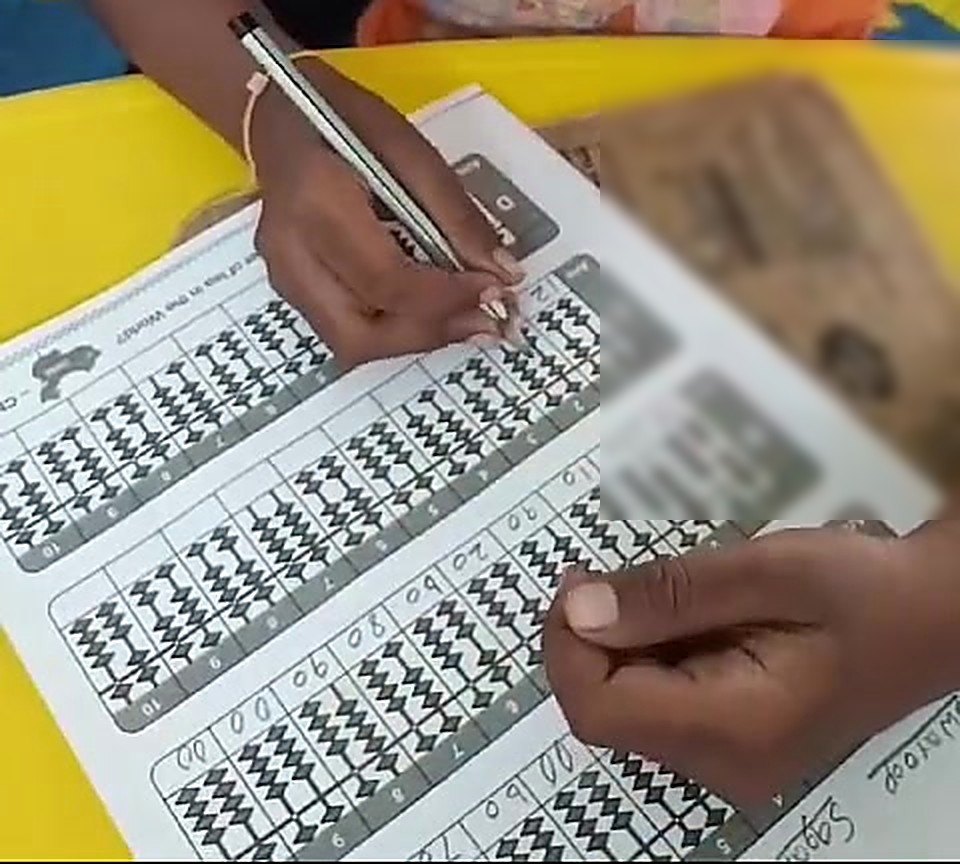
Our abacus programme runs 8 levels, each level taking roughly 1.5 to 3 months depending on how fast the child picks it up. One batch, up to about 25 children, one day a week, ages 5 to 13. Fees are roughly ₹1,800 to ₹2,800 per level, again varying by area.
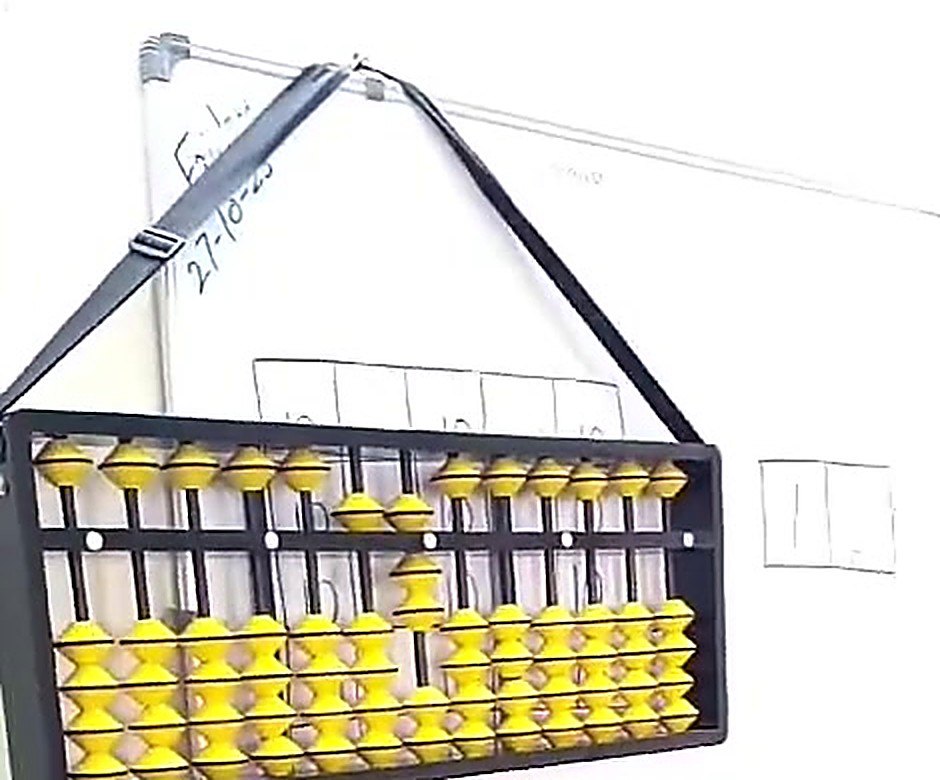
Notice the age range: 5 to 13. These are school-going children. They are not your preschool parents — they are new families walking into your building for the first time. That is the quiet benefit of abacus. A parent whose ten-year-old comes here on Saturdays is a parent who already knows your name when her younger child turns three.
It is also the least demanding on the floor. One day a week, one batch, same classroom, and the material is basically the teaching abacus, the student kits and the worksheets.
What the four streams add up to
If I take the first branch and look at where the money comes from, the rough split as of 2026 is:
Stream | Roughly what share of the branch's income |
|---|---|
Preschool | ~60% |
Daycare | ~20% |
Phonics | ~15% |
Abacus | ~5% |
Please read that table as a shape, not as a law. Another branch of mine sits closer to 80 / 10 / 10 / 0. The split follows the locality — how many mothers work, how many school-going children live within walking distance, what the competition is already offering.
But the shape is the point: roughly 40 per cent of that branch's income comes from hours the building would otherwise be sitting empty. Not from new admissions. Not from a bigger building. From the same floor, after 1 pm.
What it actually cost to add all this
This is the number people expect to be large, and it is not.
Across the extra streams, the one-time material spend was roughly ₹40,000 to ₹45,000. That covered, broadly:
Sleeping beds and bedding for the daycare children
A fridge and an oven for meals
A water filter
The teaching abacus and student kits
Books, flashcards and teaching aids for the activity classes
That is it, on the material side. No new rent. No new deposit. No new signboard. No second electricity connection. The expensive part of a preschool — the space and the setup — was already paid for years ago. (On our setup spending I will admit we overpaid badly the first time; that is covered in the startup cost article.)
The real cost is not the material. It is staff.
Part of daycare genuinely sits inside preschool working hours, so the existing team can absorb some of it. But the hours after that are extra hours, and extra hours need extra people. The activity classes need someone trained to actually teach them. If you plan this honestly, the staff cost is the line that decides whether the extra income is profit or just extra turnover.
My mistake: I copy-pasted the model to another branch
I did not start with four streams. Nobody does. In 2022 we opened with just the preschool, and the rest came slowly, one at a time, over the following years. Even today there are branches in my network that do not run everything.
The mistake came later, when it was working.
Once the model was running well at one place, I took the whole thing — the same streams, the same structure — and dropped it onto another branch as-is. Copy-paste. I did not sit down and check what that particular locality actually wanted, whether there were enough school-going children in walking distance for an abacus batch, whether the mothers in that area needed a twelve-hour daycare or none at all.
It did not work there the way it worked here. Some of it ran half-full, and half-full batches are worse than no batches, because you are still paying a teacher and still blocking the room.
What I should have done is what I now do: before adding a stream at a branch, ask the parents who are already with you. Twenty conversations at the gate at pickup time will tell you more than any plan. If fifteen out of twenty say "yes, we need daycare till 6", you have a daycare. If they shrug, you do not — and no amount of your enthusiasm will change that.
My one rule: every stream must stand on its own staff
If you take one thing from this article, take this.
It is tempting — especially in year one, especially when money is tight — to run the extra streams on the same people. The preschool teacher takes the phonics batch. The same teacher watches the daycare children. It looks efficient on paper, because you have added income without adding salary.
It is not efficient. It is a loan you are taking from your own quality, and it gets repaid in the worst possible way. A teacher doing three jobs does none of them properly. And the day she resigns — and she will, because nobody does three jobs for one salary for long — you do not lose one stream. You lose three at once, in the same week, in front of the same parents.
So: every stream stands on its own staff. If a stream cannot pay for the person who runs it, that stream is not ready yet. Wait, fill the batch, then hire. That is slower. It is also the only version of this that survives.
Should you do this?
If your preschool is stable — if the admissions are steady and you are not lying awake about next month's rent — then yes, almost certainly. The building is your biggest fixed cost and you are currently using it for four hours a day. That is the easiest problem in this business to fix.
If your preschool is not stable yet, fix that first. Adding a second stream to a struggling first stream does not give you two businesses. It gives you two problems and a very tired owner.
And start with one. Phonics, most likely, because your children and your parents are already there. Get it full, get it staffed, get it boring. Then look at the clock, see what hours are still empty, and ask the parents at the gate what should go in them.
If you are still at the stage before all of this, the questions people ask me most often before opening — registration, location, competition, timelines — are answered here: the 10 questions everyone asks me before opening a preschool.
